
Ksitigarbha Bodhisattva is a highly respected figure in Han Buddhism, alongside Goddess of Mercy, Manjushri, and Samantabhadra. Many temples worship Ksitigarbha Bodhisattva. What is his origin? Why do so many temples worship him? In this article, we hear from Professor Zhang Bu Sheng, Chairman of Chinese Culture Promotion Society (Singapore).
What is the origin of Ksitigarbha Bodhisattva?
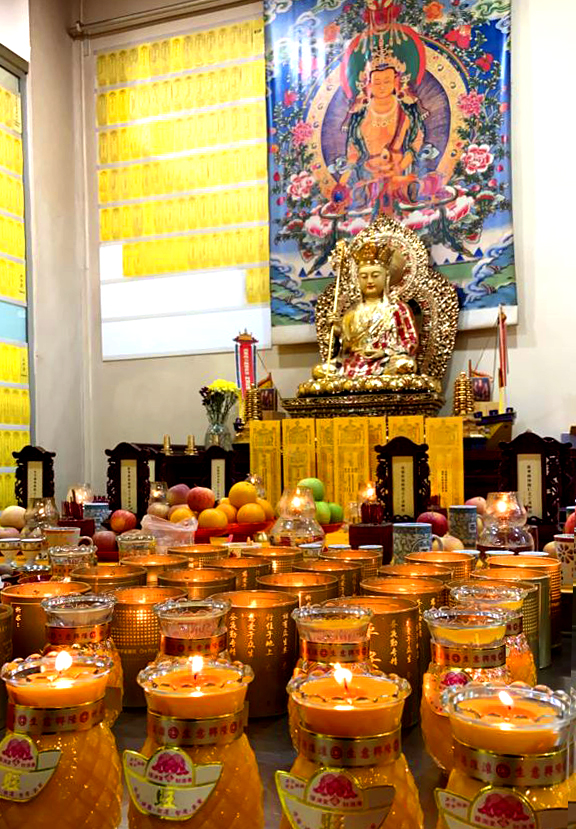
Ever since Buddhism traveled to China and became a part of Chinese culture, there emerged many folk beliefs and customs. This includes worshipping Ksitigarbha, Goddess of Mercy and Shakyamuni. Together, they form the “Saha Trinity”. Professor Zhang explains that aeons ago, Ksitigarbha had achieved Buddhahood but became a Bodhisattva so that he could save and liberate all sentient beings suffering in Hell. According to the scriptures, Ksitigarbha’s mission is to assist Shakyamuni which is why he, together with Shakyamuni and Goddess of Mercy, are called the “Saha Trinity”.
After Shakyamuni entered nirvana, Ksitigarbha was entrusted the task of helping those sentient beings that suffer the most. More specifically, his job is to help them realize their true nature, and achieve awakening. Ksitigarbha also transforms himself into different forms so that he may be amongst sentient beings in all the six realms. Ksitigarbha also takes on different names in the six realms, which explains why different temples present different images of Ksitigarbha. His role is also well-documented in Kakuzen Sho, which is considered the “encyclopedia” of Japanese Shingon Buddhism.
Why is he given the name Dizang?
Professor Zhang explains that the name comes from a Chinese saying that likens the temperament of Ksitigarbha Bodhisattva to the calmness of Earth. And like a treasure repository, he possesses wisdom and is able to counsel and guide sentient beings to spiritual awakening. Since Ksitigarbha has made the vow to liberate all sentient beings, and only then will he become Buddha, he is also called the Bodhisattva with the Noble Vow (Dayuan Dizang Pusa).
Buddhist teachings focuse on the heart. There is no binary, no two opposing parts, so all of us are Ksitigarbha Bodhisattva. We are Him and boundless, and omnipresent. Originally, we possessed infinite treasures, and everything in this universe. And they are all in our heart.
The place of Ksitigarbha basically refers to our heart, which stores everything in this universe. And this is the secret to the name “Ksitigarbha”. When we recite the name, we also remind ourselves of who we really are and what we originally possess.
It is customary to place a statue of Ksitigarbha in temples conducting pioneer or ancestor worship. The common understanding is that Ksitigarbha oversees Hell, so he’s also called the Lord of Hell. Most see him as the boss of Yama i.e. King of Hell. We also see him being worshipped in funerals, Qingming and Zhongyuan festivals, and also puja events. Temples worshipping Ksitigarbha are also erected in places like the cemetery and battlefield.
The Ksitigarbha Bodhisattva Purvapranidhana Sutra vividly describes the situation in hell, the six realms of existence, and the noble vow of Ksitigarbha. It is also a sutra about filial piety. This explains why the sutra is highly regarded by Chinese.
Ksitigarbha’s Birthday and Puja Event

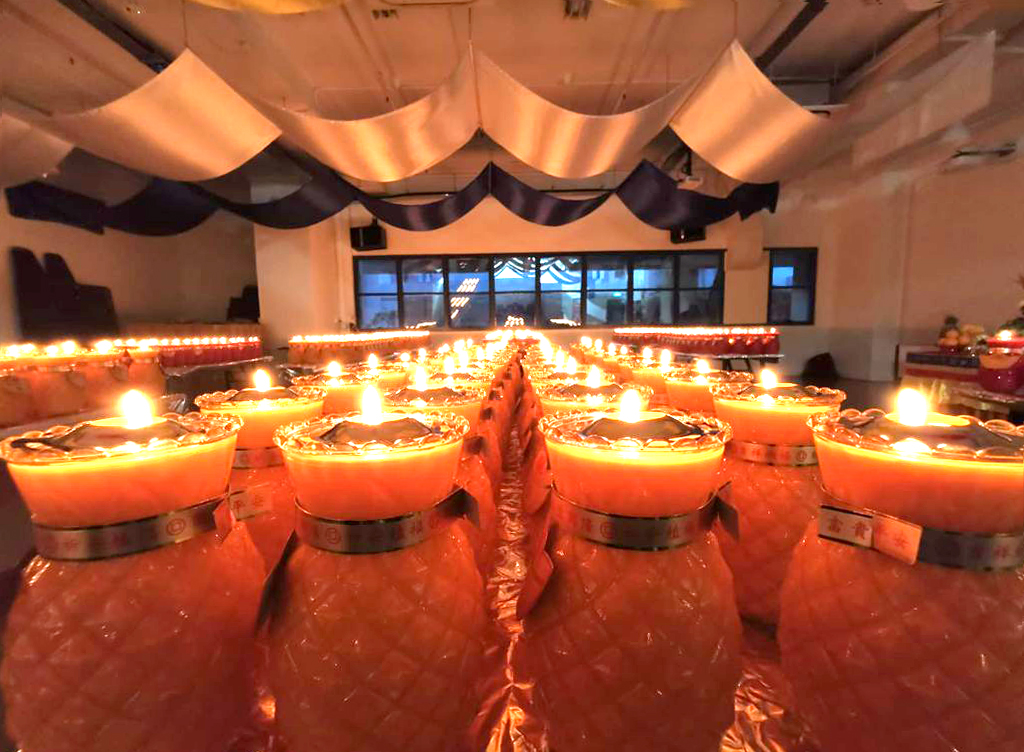
According to folk belief, the last day of the seventh lunar month is Ksitigarbha’s birthday. On this day, many organizations will celebrate and conduct major puja events to liberate not just their ancestors but sentient beings in general.
The merit of having faith in Ksitigarbha and making offerings to him is immense. It is clearly stated in the Ksitigarbha Bodhisattva Purvapranidhana Sutra that those who believe and take refuge in Ksitigarbha, and also provide offerings, will see their wishes come true. Refer to “Earth God Protector” Volume 11, in which states ten benefits.
What are these ten benefits?
- Rich, fertile soil
- Peaceful household
- Dead relatives to ascend to heaven
- Longevity
- Getting what you wish
- No calamities
- Elimination of everything bad
- No nightmares
- Receiving the protection of gods and deities
- Encountering spiritual goodness
Source: Lianhe Wanbao, 28th August 2021 (Wednesday)